Sunday - ideation
Creativity from problem to prototype
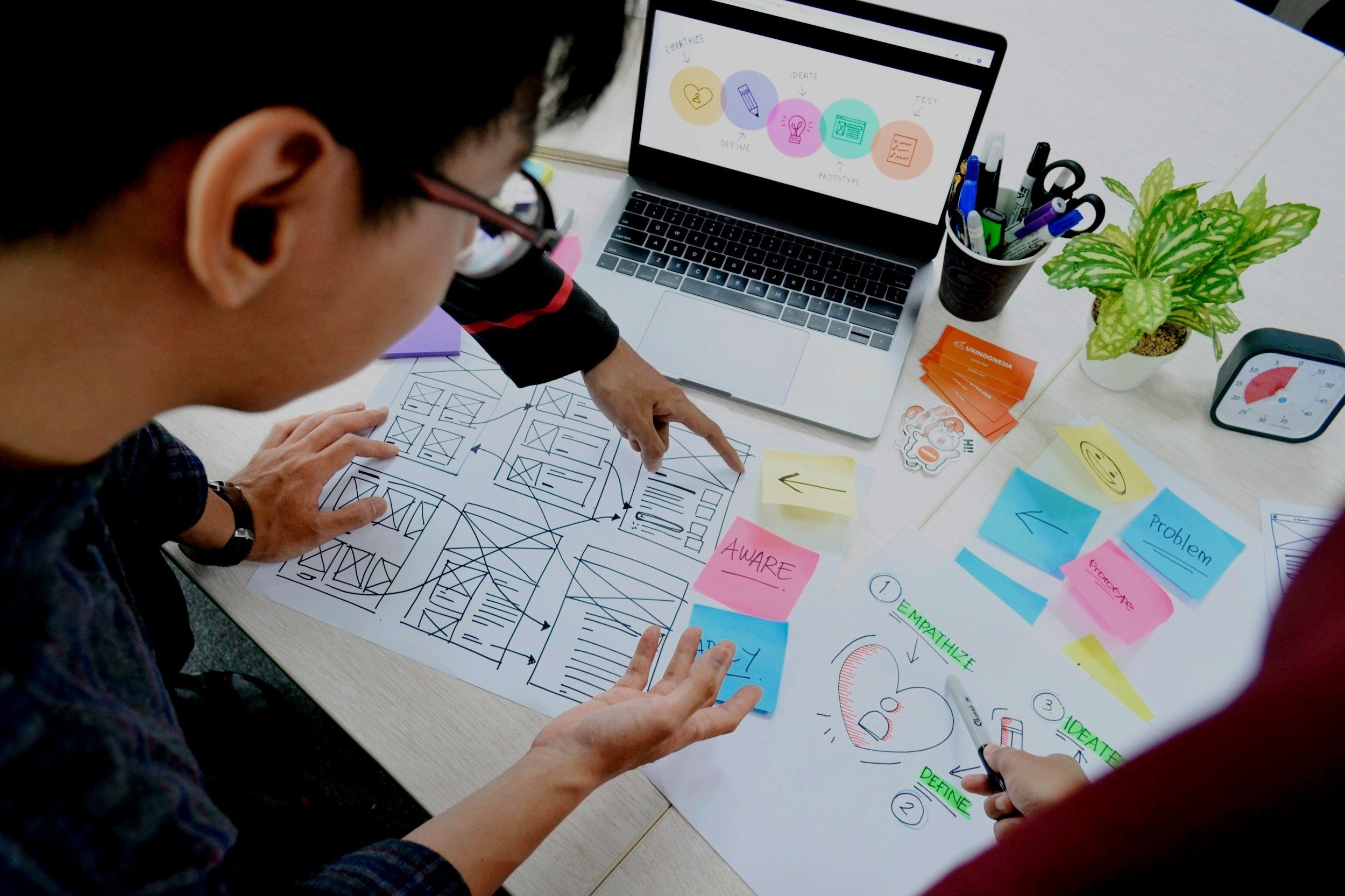
Place: In the auditorium.
Time: 09.30-10.30
Creative concept development
Michael will introduce the idea generation process from AI problem to conceptual solution prototype.

Michael Frederiksen
Education design specialist
AI education, innovation, and filmmaking
The purpose of Sunday
Your group's goal today is to create a relevant idea that addresses the issues young people aged 19-25 are facing with AI.
Link to Michaels presentation: Ideation.

From problem to ideas
09.30-12.30
From many ideas to one concept
Now you must work your way forward step by step. You must develop ideas together and individually. But you stay with your group to collaborate.
During the steps you can use ChatGPT, Gemini, Copilot, or similar.
These are the phases.
1. Creative inspiration from external media creators
2. Get the first ideas: De-briefing first and brainstorming
3. AI idea generation: Using 3a or 3b
4. Feedback and discussions with specialists and specialists
5. Reflecting, exercises to get closer to a concept
6. Fanalise, test, adjust, refine
7. Presentation and feedback

Time: 09.30-10.30
1. Creative inspiration
Let’s start idea development. We asked 3 people which AI developmet they believe is most important to solve? 12 minutes each.

Creators’ use of AI
Neriah Tellerup Andersen
Influencer, creator, Owner of Neda Media Marketing & AI-Agency

Vertical film formats, new business models
Mads Erichsen
Film director and producer, Burning Films
The future of AI skills in film and media
Calle Gisselsson
Executive Producer
AI Lab of SVT Swedish Television

Time: 10.40-11.30
2. Get the first ideas
Follow the process below towards the end of the day 1.
A. First brainstorming
Get as many ideas as you can to help the young creators with new initiatives and activities that solve the problems! As inspiration, use the insight you have with you from yesterday. Keep going.
If you run out of ideas, use "reverse brainstorming" to generate more ideas.
It is a way of generating opposite solutions to the problem and then turning it into good solutions. The reverse brainstorming allows you to create unusual and unexpected ideas.
Ask, for example:
- How can we make the use of AI unattractive to students, creators, filmmakers and journalists?
- How can we make it attractive not join the democratic community?
Spend 20 minutes on task B.
3. AI idea generation
Michael introduces two methods, 3a and 3b, for AI-assisted ideation:
3. Controlled prompting: Generate ideas using AI in different expert roles.
Participants choose a method to generate and explore new ideas.
Complete this task in 15 minutes.
Time: 11.00-11.15
4. Feedback from specialists and target group
Ensure you obtain feedback from guest specialists. Other participants and and experts may offer useful comments and insights as well.
Aim for three feedback sessions and share your three best ideas in each one.
Take notes during the feedback session.
Time: 11.15-12.00

Lunch break 12.00-13.00
Time: 13.00-14.00
5. The concept development proces
Purpose
The goal is to move from the many ideas and inputs of the morning to a concept description ready for testing.
A. Select and sharpen your idea 10 min
B. Define the learning 10 min
C. Invent the learning experiences 20 min
D. Design the AI Week 15 min
Create a powerpoint of your concept.

Break 14.00-14.15
Time: 14.15-14.30
6, Finalising, testing, adjusting
At this point, there is relatively little time to test and adjust your concept based on reactions and comments from the 19-25 year old target group. Adjust and refine your concept after testing. Feedback from facilitator and ChatGPT against your persona.
Time: 14.30-15.30.
7. Concept presentation
A few groups present their AI Week concepts for feedback from the group.
There might be other feedback to the groups dependent on time and energy